
As of September 2022, a 6kW solar panel system for a 1,500 square foot home, the national average cost of solar panel installation is $16,500. Solar panel costs per watt can range from $2.50 to $3.50, and a lot will depend on where the house is located.
Typically, 3kW to 8kW in size, residential solar panels can range in installation costs between $9,255 and $28,000. On the other hand, if you need further information, then read along to find out more on how much you need to spend for a solar contractor installation this 2022.
Introduction
Recently, prices have been decreasing, and solar panel installations are becoming more affordable as solar energy continues to gain popularity across the country and here in Orlando, Florida.
The cost of solar PV panels has decreased by 70% since 2014, according to the Office of Solar Energy Efficiency and Renewable Energy [1], while the U.S. Energy Information Administration claimed that solar power usage has increased significantly since 2014.
The equipment and installation are priced between $12,000 to $30,000, taking all of this into account. This vast range reflects a variety of elements, including the location, size, solar exposure, and energy usage of the home.
A 6-kW solar energy system costs, on average, roughly 10.55 cents per kilowatt-hour in the country. For reference, household solar panels typically range in size from 3kW to 8kW. This is without considering any tax breaks and rebates. But what exactly does all of it mean? Let’s see how much solar energy might cost for your home.
Generally speaking, it’s safe to assume that solar panel installation for a 1,500-square-foot home will cost around $16,500. In the end, your home’s exposure to the sun and your electricity consumption will determine the price mostly. Homes nearer to the equator will almost certainly cost less than those farther away.
Advantages of Hiring a Solar Contractor
Before we move along and examine the cost of solar panels and their installation cost, we’re aware that you’re considering doing your property’s solar project on your own. Yes, doing the DIY method may seem like the easier way to do it, but your rooftop solar project will be less expensive if you don’t have to hire a solar contractor. And you might be able to handle the work if you have the necessary skills.
But for the typical homeowner, working with a qualified contractor is a more sensible option, not only for your home but also for you and your money as well. And here are the reasons why it’s the better route:
1. General safety comes first.
How long have you been working on rooftops and ladders? All of these operations can be very hazardous, including climbing and down a ladder, moving heavy photovoltaic panels and racks, and moving about on a slanted surface above the ground.
Instead of taking a chance at an accident, hiring a professional solar installer makes more sense.
2. Electrical Safety
Are you an electrician with a license? In that case, you might want to think again before finishing your own rooftop solar installation.
You must link the system to your power source to activate the photovoltaic panels. A mistake made here could cost you money and endanger your safety and property. Additionally, most municipal laws demand that an electrician or solar installer complete the wiring.
3. Specialized Equipment and Tools
Even though you might have a shed or home workshop full of tools, chances are good that you don’t have everything you need to finish a rooftop solar installation.
There are more tools than just a ladder and power drill that you’ll need, and some of them aren’t exactly inexpensive. Professional solar installers are equipped with the necessary specialized tools and machinery.
4. Right Training and Experience
Watching films of expert installers in action makes finishing a solar installation seem easy and uncomplicated. However, this is only possible due of their in-depth education and training. In fact, the typical homeowner may find it difficult to develop and install an efficient rooftop solar power system.
5. Warranty Protection
Photovoltaic panels of the highest caliber generally come with 25-year warranties. The guarantee could be voided if you install them yourself, though. Only modules installed by a professional and licensed solar installation are covered by some manufacturers.
6. Home Resale Value
Homes with photovoltaic systems typically sell more quickly and for a higher price than comparable homes without rooftop solar panels. However, these advantages only apply to professionally installed systems; if you carry out the installation yourself, assessors and property purchasers could find it challenging to evaluate the quality of your work.
Solar Panels Cost and Factors to Consider
Now that you know the advantages that come along with hiring a solar contractor, the cost of installing solar panels on your home will mostly depend first on the following factors:
1. Average Utility Costs and Energy Use in Your Home
The quantity of solar panels you need to install to offset your energy expenses depends depend on how much energy your household uses. Homeowners can determine their daily average energy use from their power bills and compare it to the number of solar panels required to meet their whole energy needs.
2. Solar Potential of Your Rooftop, or the Amount of Sunlight It Gets Each Year
The amount of solar energy that is absorbed by your home’s solar panels, and consequently, the amount of money you can save on your current electric bills, can be influenced by the amount of sun exposure your property receives.
3. The Average Cost for a Solar Panel System in Your Location
The local installation cost and the number of incentives and rebates in a given area can vary depending on where a homeowner resides.
4. The Local Average Labor Cost and Demand
The cost of labor per watt varies from state to state but is roughly 50 cents nationwide.
Remember that installation fees for solar panels differ from state to state. However, the Department of Energy reports that new solar energy projects are lowering the cost of installing solar panels countrywide year over year. The price of solar energy has decreased by more than 80% in the last ten years.
Texas, California, Florida, Virginia, and Georgia are the top 5 states for solar installations, according to the Solar Energy Industries Association.
However, it’s important to remember that as solar panel prices continue to fall, some of the tax breaks and rebates currently available for installations may soon expire. Because of this, it might be more beneficial to start the procedure right away rather than waiting if you believe solar panels are the best option for your situation. Modernize suggests speaking with a qualified contractor about this.
Solar panel installation is a rather expensive project when compared to other home renovation initiatives. However, they can gradually increase a home’s market value and lower utility costs. Usually, within the first year, solar panels start to break even in modest amounts. Depending on the setup and where you reside, homeowners can anticipate a longer payback period of between five to fifteen years.
Solar Panel Installation Cost by Size
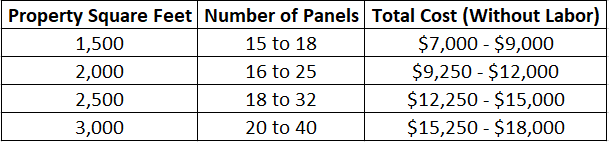
To help you further in evaluating your own cost, you may refer to the table below. Find the nearest square footage to your property, then analyze the kind of panels you will need and their prices. The number of panels varies depending on whether you want to offset all of your electricity demands or only a portion of them and whether you live in a place that is better or less favorable for solar due to climate.
Number of Solar Panels You’ll Need for Solar Installation
When it comes to determining the number of panels you’ll be needing, you need to figure your daily electricity consumption in your home first.
We recommend speaking with a reputable solar contractor about these issues. For convenience, divide your monthly kilowatt usage by 30 to determine how much energy you consume each day before the consultation by using your electric bills as a guide. To put things in perspective, the typical American home uses about 900-kilowatt hours (kWh) per month or nearly 11,000 kWh per year.
In the end, the number of panels you purchase counts since it affects how many kW of electricity are generated daily. In turn, you will want more solar panels if you want more of the electricity bills you intend to offset by solar energy. You won’t need as many solar panels if you merely want to use them to generate a percentage of your energy.
Additional Solar Panel System Installation Cost
To receive the most accurate price estimate for your solar energy system, there are a few things you’ll want to include in the overall cost. Additional factors that will affect the price of your solar panels include the following:
Labor Charges
Local labor expenses for solar installation vary depending on where you live and what solar companies typically charge.
Solar Mounts Installation
The price will also depend on how much it costs to build the racks that house your home’s solar panels. On the ground, on poles, or—most frequently—on the roof, you can select from fixed mounts or tracking mounts.
Solar Inverters Installation
To convert solar panel power from direct current (DC) to alternating current (AC) that may be used in your home, a solar inverter must be installed.
Additional Expenses
Also, there can be charges for any applicable local inspection fees, permit fees, and taxes on the solar panels.
Thankfully, costs have decreased as more people use solar power, and this trend is quite likely to continue in the future. The National Renewable Energy Laboratory (NREL) of the federal government conducted a study and found that installed prices have decreased on average year by 13% to 18%.
To acquire a more precise cost estimate for your installation, always make sure to speak with a local solar expert, and here in Orlando, Florida, you may contact Everything Solar today for your solar needs!
Size of Solar Panel System
An average home uses about 10,850 kWh of electricity a year, or 905 kWh per month. That means a typical home with adequate sunlight might install a 5 kW to 6 kW solar panel system to help lower utility costs.
You might be interested in learning more about your solar system’s sun number score, which is determined by the geographic location of your house and its typical exposure to sunshine. For further information, talk to your contractor about the various solar panel measurements and sizes.
The cost per watt will decrease when you install larger solar panel systems for your home. With regard to solar panels, parts, labor, licenses, and overhead, the price per watt ranges from $6 to $8.
Your initial installation costs for solar panels may be more than covered in seven to twenty years by the money you save on electricity bills. When offered, solar subsidies and incentives from the government and regional energy suppliers can also hasten your return on investment. Additionally, if net metering is allowed in your community, you could be able to participate in selling any extra electricity generated by your solar panels.
Frequently Asked Questions
What Are Solar Panels Return on Investment (ROI)?
By calculating your overall payback, you may determine the solar panel installation’s return on investment. Determine how much you will save each month on energy expenses by first calculating the cost of installing a solar panel system.
These two figures illustrate how quickly your initial expenses will be covered by your savings. The Northeast will generally have higher electricity prices than the Northwest. Where electricity costs are high, and the sunlight is ample, solar tends to be more cost-effective.
How Does Net Metering Works?
To put it simply, if your home can benefit from solar net metering, solar energy that is abundantly gathered and not needed in your home will flow through your meter and out to the grid.
Your home has a digital meter that tracks power coming into the building and going out in both directions. The “net” in the phrase denotes that the homeowner only pays the “net” cost of the power used by the residence, less any surplus that is sold back to the grid.
Homeowners can sell the extra solar energy they generate back to their local utility in states where net metering is in place. As a result, their electricity bill is reduced, cutting down on their payback period and increasing their cost savings.
How To Save on Solar Panels?
There are many different solar installers to pick from, and they all have various warranties, solar panel models, and price ranges. Here are some things to keep in mind to help you choose the best contractor for you:
Brands of solar panels
Various brands and versions of panels are offered by various firms. Make sure the solar installer you are considering carries the brand you want if you have a preference.
Warranty
A lot of businesses provide various warranties with various levels of coverage. The ideal warranty is one that lasts for 25 years.
Reputation
A good reputation is probably something that long-running businesses have. This is essential because it guarantees that the company will complete your solar installation and offer exceptional customer service and aftercare, including part repairs and replacements.
Contract
Carefully read the contract provided by your solar installer to ascertain the services they will render, the scope of the guarantee, and the expectations you should have for the installation procedure.
How To Get the Best Solar Panel System Costs
Solar is a large investment that frequently comes with a lot of complications. In light of this, the majority of US solar buyers evaluate two to five solar quotations before making a choice. This is because you can save money by comparing different solar quotes.
Comparing several solar rates might help you save money for two main reasons: competition, and transparency. The competition effect states that each extrasolar quote you obtain will assist you in locating the ideal solar panel system at the ideal cost. It can be more difficult to place a premium on transparency, but in an industry that has historically been opaque, understanding the equipment that will be installed on your roof and its quality can help you get the greatest solar solution for your requirements.
Are Average Solar Panel Worth It in Orlando, Florida?
In Orlando, FL, solar panels are indeed worth it! In fact, solar panels pay for themselves in most locations, while particular features, such as the price of power, available subsidies, the climate, and sun angle, will all have an impact on how quickly you break even in comparison to other location
By building a 5-kW solar system in Orlando, where the average cost of power is 16 cents per kilowatt-hour (kWh), you may expect to save $70,900 over the course of 20 years (assuming you pay upfront with cash). If you decide to finance your system with a $0 down loan in Orlando, Florida, you can begin saving right away (though your long-term savings will be less).
If you need an exact estimate today, don’t hesitate to reach out to Everything Solar today, and we’ll help you get started!